The Affordable Housing "Delay" Is a Dangerous Misunderstanding
There is a dangerous myth spreading among affordable housing owners in New York City.
The myth: "Buildings with rent-regulated units got an extension to 2030. We have more time."
The reality: According to the NYC Department of Buildings' official guidance, buildings with some rent-regulated units but less than 35% rent-regulated received a 2026 compliance deadline, NOT a 2030 exemption.
Here is the exact language from DOB's Sustainable Buildings FAQ:
"After 2026, they will need to meet subsequent deadlines on the same timeline set for all other Covered Buildings."
Translation: You get a 2-year paperwork delay. The 2030 carbon cliff is identical. Your emissions must drop approximately 50% by 2030, just like every Class A office tower.
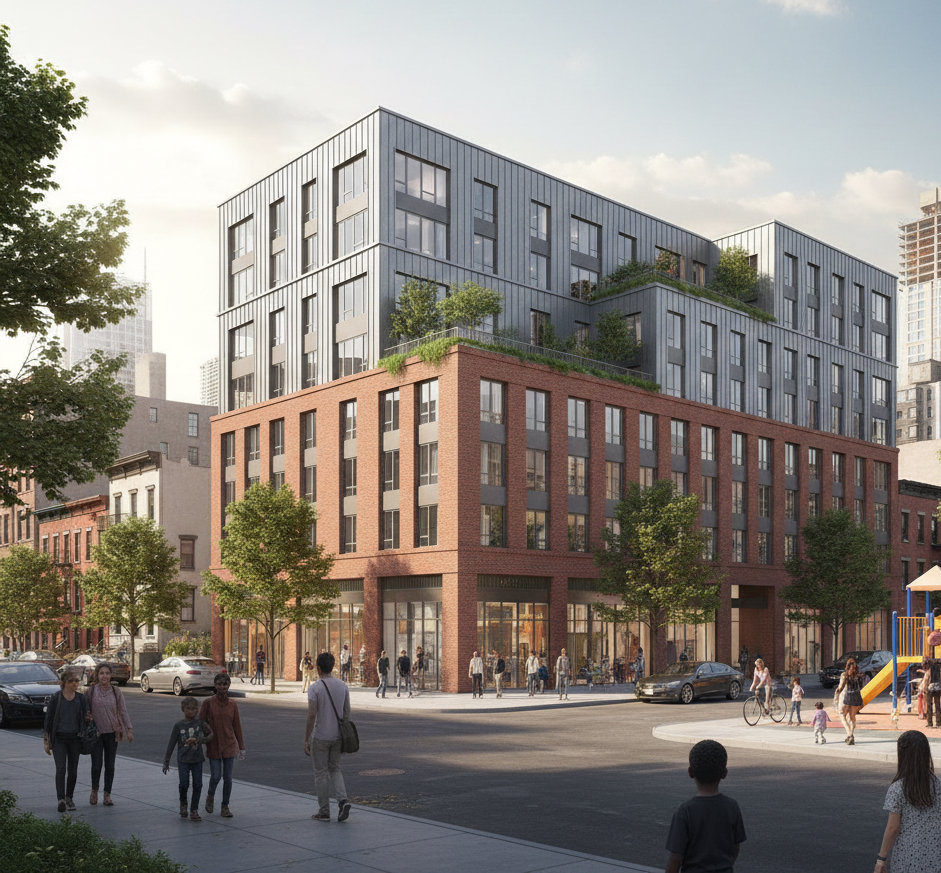
⚠️ Critical: Tenant-Based Vouchers Do NOT Qualify
The DOB explicitly states: tenant-based vouchers (Section 8, etc.) do NOT qualify for any exception. If your building relies on voucher programs, you are fully covered under LL97 with no delay.
The "35% Rule" That Determines Your Deadline
Here is how to know where you stand:
✅ If ≥35% of units are rent-regulated:
You qualify for the affordable housing exemption and must file a decarbonization plan by 2025. Your 2030 caps are adjusted.
⚠️ If <35% of units are rent-regulated:
You face the 2026 deadline and the same 2030 caps as market-rate buildings. No adjustment. No extension.
This is the trap. Thousands of mixed-income buildings fall into the second category. Their owners believe they have "affordable housing" status. They do not.
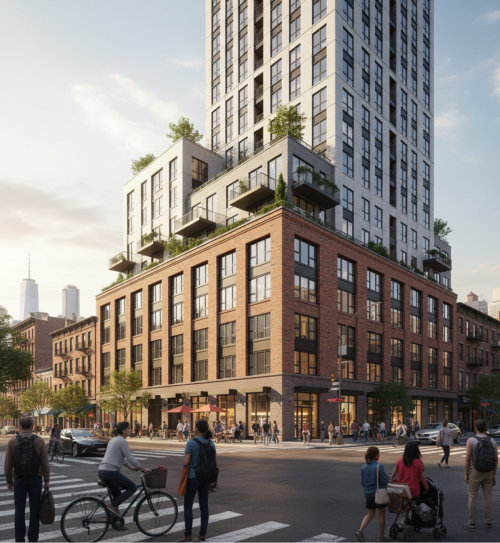
Mixed-income buildings with <35% regulated units face the 2026 deadline
🏘️ The Affordable Housing Dilemma: Same Cap, Zero Capital
Class A office towers have balance sheets. They can raise capital, issue bonds, or pass costs to tenants.
Affordable housing owners have none of these options.
- No rent increases: Rent-regulated units cannot raise rents to fund retrofits.
- No reserve requirements: Many affordable portfolios operate on thin margins with no capital reserves.
- No pass-throughs: Commercial leases allow cost pass-throughs; residential rent-regulated leases do not.
- Same 2030 cliff: 50% emissions reduction required, regardless of ability to pay.
The gap between "what must be done" and "what can be afforded" is enormous.
✅ The Preservation Strategy: Extend Asset Life, Reduce Emissions
Affordable housing cannot afford $500,000 heat pump retrofits. But they can afford $15,000 scale prevention that delivers:
- 12-18% immediate efficiency gain on existing boilers and heat exchangers
- 5-7 years extended boiler life, deferring catastrophic capital支出
- Verifiable Good Faith documentation for 2026-2029 compliance
- Zero tenant disruption — no construction, no apartment entry
- No chemicals, no salt, no maintenance — ideal for understaffed buildings
The math: A 200-unit affordable building with a 20-year-old boiler spends $80,000/year on gas. A 15% efficiency gain saves $12,000/year. Vulcan pays for itself in 15 months and continues saving for decades.

KRUUNU ASUNNOT — 80 properties, one solution
🏢 Real Proof: 80-Property Affordable Portfolio in Finland
Company: Kruunu Asunnot — a high-quality rental apartment company in Finland
The Challenge: Managing limescale across 80 residential properties. Traditional water treatment required constant maintenance, chemical handling, and tenant complaints about poor water quality and scaling fixtures.
The Solution: Vulcan mineral descaling devices installed across the entire portfolio — on domestic hot water systems, boilers, and main water lines.
The Results:
- "The domestic hot water systems and the water quality has improved."
- "Heating efficiency has increased."
- "There are no more problems with limescale."
No chemicals. No salt. No maintenance. Just results.
📅 The 2026-2029 Window: Your Only Chance to Prepare
If you are in the <35% rent-regulated category, you have three years (2026-2029) to reduce emissions before the 2030 cliff.
What you must accomplish by 2030:
- Reduce emissions approximately 50% from 2024 levels
- Document every efficiency improvement for DOB audit
- Preserve aging equipment to avoid forced replacement
- Secure financing before capital markets tighten
Vulcan is the only efficiency measure that pays for itself before 2030. Every dollar spent on scale prevention saves $2-3 in avoided fines and reduced gas consumption.
💰 Affordable Housing Math: Preserve vs. Replace
$500,000+
Full boiler replacement (unsubsidized)
$268/ton
Annual fine per metric ton over cap
$15,000
Vulcan installation (one-time)
15-month payback
When to Prioritize Vulcan in Affordable Housing
- Immediate Priority (2026): Any mixed-income building with <35% rent-regulated units facing the 2026 deadline.
- Boilers >15 Years Old: Extend life 5-7 years and avoid emergency replacement.
- High Tenant Complaints: Buildings with frequent maintenance calls for low pressure, no hot water, or scaling fixtures.
- Thin-Margin Portfolios: Any affordable housing owner who cannot afford $500k heat pump retrofits but needs verifiable emissions reductions.
- GRESB/ESG Reporting: Portfolios seeking to document sustainability improvements without major capital支出.
- Any Building With: Heat exchangers, boilers, cooling towers, or recirculating hot water systems. If it transfers heat to water, it scales.
Don't Let the 35% Rule Trap Your Portfolio
The 2026 deadline is real. The 2030 cliff is approaching. Vulcan preserves your assets while reducing emissions.
About the Author
Waslix- Clearly Clean Water (Vulcan Mineral Descaler) provides non-chemical, maintenance-free scale prevention solutions for commercial, industrial, and residential buildings. Vulcan is trusted by affordable housing portfolios, hotels, restaurants, and industrial facilities worldwide.