Passive Design Meets Hidden Mechanics
The new Davis Center at Harlem Meer is one of NYC's most innovative sustainable buildings. It's tucked into the landscape with the park extended over the roof, using thermal mass and passive cooling to reduce energy demand.
Passive
Cooling design
Thermal mass strategy
Tucked In
Landscape integration
Park extends over roof
Hidden
Mechanical systems
Difficult to access
"The new recreation facility is tucked into the landscape, extending the park over the roof and providing thermal mass and passive cooling."
Key design features include:
- Building massing optimized for thermal comfort in all four seasons
- Park extended over the roof for thermal mass
- Passive cooling strategies to reduce mechanical loads
- Integration with the surrounding landscape
The Hidden Detail
"Tucked into the landscape" means mechanical systems are buried and hard to reach. Heat pumps in basements, heat exchangers in confined rooms, and equipment that's difficult and expensive to maintain.
The Challenge of Inaccessible Equipment
Heat Pumps in Basements
Once buried, accessing heat pumps for maintenance requires excavation or major disruption to the landscape above.
Heat Exchangers in Confined Spaces
Tight mechanical rooms make regular cleaning and descaling nearly impossible without equipment removal.
High Operating Temperatures
Mechanical spaces stay hot, and hot environments accelerate scale formation on heat transfer surfaces.
Deferred Maintenance Risk
When equipment is hard to reach, maintenance gets deferred. Scale builds up, efficiency drops, and failures become inevitable.
The question for the Davis Center: Will they have to excavate the park to access the heat exchanger? Or will they install permanent, maintenance-free scale prevention during construction?
Real Proof: Taikang Financial Tower Protects Four Heat Exchangers Without Interrupting Operations
Location: China
Building Type: Commercial office tower
The Challenge: Four heat exchanger systems in the building needed scale treatment. But there was a critical constraint: the hot water supply could not be interrupted. The building needed a solution that would work without shutting down operations.
The Solution
Four Vulcan S10 units were installed to gently clean the heat exchangers and the whole piping system. The key benefit: installation happened without stopping the machines and without interrupting hot water service.
The Results
- Four heat exchangers protected simultaneously
- Zero interruption to building hot water supply
- Gentle cleaning without shutting down equipment
- No chemicals, no salt, no ongoing maintenance
Why This Matters for the Davis Center: The Taikang Financial Tower proves that heat exchangers can be protected without interrupting building operations. For the Davis Center, where mechanical systems are buried and hard to access, this matters even more. Installing Vulcan during construction means never having to excavate the park for scale-related maintenance.
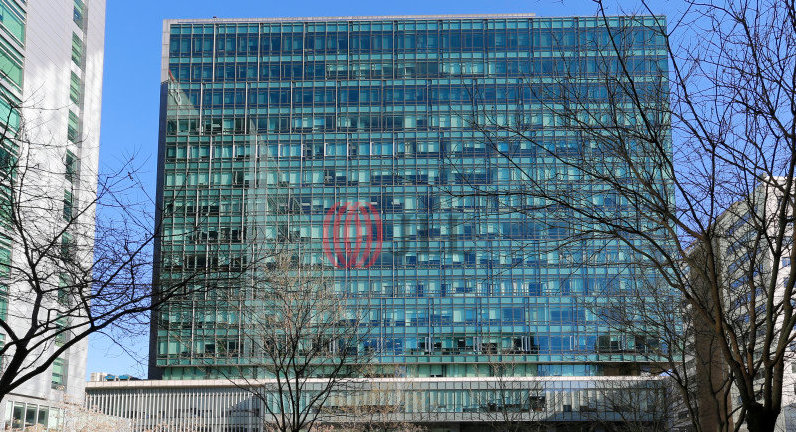
Taikang Financial Tower — Four heat exchangers protected without interrupting hot water
The Passive Design Paradox
Passive design reduces energy demand, but it doesn't eliminate mechanical systems entirely. Those systems still need protection.
Heat Pumps
Even with passive cooling, heat pumps handle peak loads. Their heat exchangers need protection.
Domestic Hot Water
Passive design doesn't heat water. Those systems scale just like any other building.
Ventilation Systems
Air handling units with cooling coils need clean surfaces for efficient dehumidification.
The paradox: the more passive the design, the harder it is to access and maintain the active systems that remain.
Why Scale Is a Bigger Problem When Equipment Is Buried
Maintenance Requires Excavation
If a heat exchanger scales up and needs cleaning, you're digging up the park. That's expensive and disruptive.
Replacement Is Even Worse
When scale causes equipment failure, replacement means crane lifts, demolition, and reconstruction of the landscape above.
Monitoring Is Difficult
You can't easily check delta-T on a heat exchanger buried under tons of soil and landscape.
Small Problems Become Big
Without regular monitoring, scale builds until efficiency drops dramatically and emergency action is required.
The Bottom Line
When you bury your mechanical systems, you need to be absolutely certain they won't need maintenance. Vulcan provides that certainty.
The ROI of Prevention
| Cost to excavate and access buried heat exchanger | $50,000 - $200,000+ |
| Heat exchanger replacement cost | $30,000 - $150,000 |
| Facility downtime during repairs | Days to weeks |
| Vulcan S10 (installed during construction) | Login for pricing |
| Future excavation avoided | 100% |
Get Exact Pricing for Your Project
For precise pricing tailored to your building's specifications:
- Existing customers: Log in to your account to view model-specific pricing
- New users: Create a free account to access detailed pricing and configuration options
- Need assistance? Contact our team for a project assessment
Account registration takes less than 2 minutes.
* Savings vary based on equipment access, system size, and water conditions.
Selecting the Right Model for Hidden Mechanical Systems
For buried or hard-to-access equipment, installing the right model during construction is critical. Create an account to view detailed specifications and pricing.
| Application | Typical Equipment | Recommended Model | Pipe Size | Flow Rate |
|---|---|---|---|---|
| Heat exchangers (small) | Domestic hot water, small hydronic loops | Vulcan S10 | Up to 3" | 65 GPM |
| Heat pumps (residential scale) | Small commercial, multifamily | Vulcan S25 | Up to 4" | 130 GPM |
| Central heat pumps (commercial) | Large hydronic systems, central plants | Vulcan S50 or S100 | 5-6" | 300-530 GPM |
The Design Phase Opportunity
For projects like the Davis Center, the time to include scale prevention is during design, not after construction when equipment is buried.
Design Phase
Include Vulcan in MEP specifications. Size for all heat exchangers.
Construction
Install during build-out. Easy access before equipment is buried.
Commissioning
Document baseline performance. Set efficiency benchmarks.
Operations
Zero maintenance, sustained efficiency, no excavation needed.
The best time to prevent scale is before you bury your equipment.
Design Phase Checklist
- Identify all heat exchangers. Include heat pumps, chillers, DHW systems, and hydronic loops.
- Assess accessibility. Which equipment will be hard to reach after construction?
- Include Vulcan in MEP specs. Size units based on pipe diameter and flow rate.
- Plan for installation. Install during construction before equipment is buried.
- Document baseline performance. Set benchmarks for future monitoring.
- Coordinate with commissioning. Ensure Vulcan is included in system verification.
- Need assistance? Contact our team for design phase support.
Protecting Buried Mechanical Systems
Don't let scale force you to excavate your sustainable design. Install Vulcan during construction.
About the Author
Waslix provides non-chemical, maintenance-free scale prevention using Vulcan technology. We help architects and engineers design buildings that stay efficient without requiring access to buried mechanical systems. Create an account for detailed model specifications and pricing.