The Automotive Manufacturing Challenge
In automotive manufacturing, precision is everything. Engine components must meet tolerances measured in microns. Cooling systems must perform consistently. And unplanned downtime costs millions.
2-3 Months
Manual cleaning cycle
Before Vulcan
9 Pipes
Secondary lines
Cleaned manually
6+ Months
With Vulcan
No cleaning needed
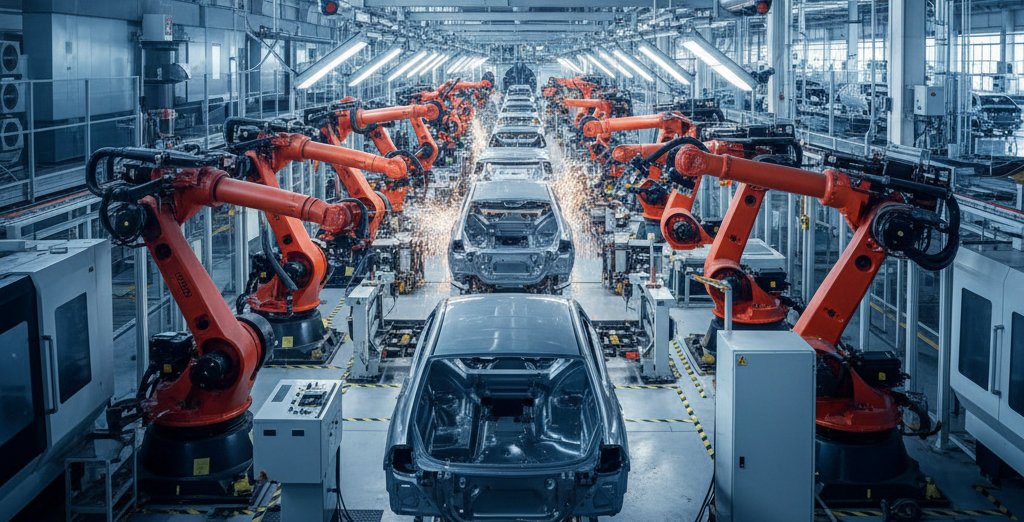
Automotive plants face unique water-related challenges:
- Induction hardening machines – Require precise cooling to achieve proper metallurgical properties
- Complex piping networks – Dozens of small lines that are difficult to clean
- High-volume production – Any downtime affects thousands of units
- Quality standards – Scale-related temperature variations cause rejects
The Hidden Cost
When scale restricts cooling flow, induction hardening temperatures fluctuate. That means inconsistent metallurgy, rejected parts, and potential warranty issues down the line.
Critical Systems Vulnerable to Scale
Induction Hardening
Precise cooling controls metallurgical properties. Scale causes temperature variations and quality issues.
Heat Exchangers
Reduced heat transfer means longer cycle times and inconsistent process temperatures.
Small Diameter Lines
Nine secondary pipes at Hyundai required manual cleaning every 2-3 months. These are the hardest to maintain.
Cooling Towers
Scale reduces cooling capacity, affecting entire plant operations and energy efficiency.
The Quality Connection
In induction hardening, cooling rate determines the hardness and durability of engine components. Scale buildup changes that rate. Parts that don't meet specifications get rejected. In high-volume production, even a 1% reject rate means thousands of wasted parts per year.
Real Proof: Hyundai Motors Eliminates Manual Cleaning
Facility: Hyundai Motor Ulsan (engine manufacturing factory)
Equipment: Induction hardening machines, pipelines, 9 secondary small pipes
The Challenge
Before installing Vulcan, Hyundai Motor Ulsan had serious mineral scale problems in the pipelines and induction hardening machines. The factory had 9 secondary small pipes that had to be manually cleaned every 2-3 months. Each cleaning meant production downtime, labor costs, and risk of damage to the pipes.
The Solution
Vulcan was installed to treat the water feeding the induction hardening machines and pipeline systems. For automotive manufacturing applications, the Vulcan S100 or S150 provides the capacity needed for factory-scale operations.
The Results
- Manual cleaning of 9 secondary pipes eliminated
- No more 2-3 month cleaning cycles
- Induction hardening machines protected
- Zero production downtime for descaling
- No chemicals, no ongoing maintenance
The Math: 4-6 cleanings per year eliminated. Each cleaning: multiple hours of downtime, 2-3 workers, potential pipe damage. The savings paid for Vulcan many times over.
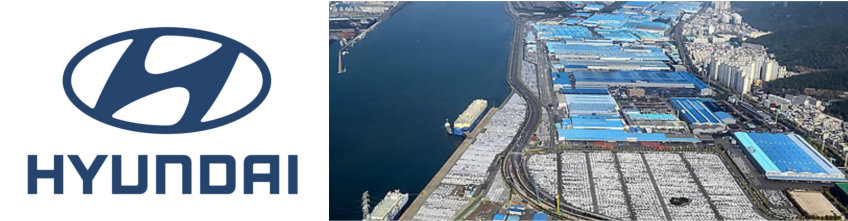
Hyundai Motors — 9 secondary pipes, 2-3 month cleaning cycle eliminated
More Automotive & Manufacturing Success Stories
Chrysler Cars Factory
Chrysler saves $15,000 per machine per year. 12mm calcium buildup eliminated.
Read Case StudyJiangsu Noon Crop Science
After 6 months, old scale disappeared and no new scale formed.
Read Case StudyTopTex Textile Factory
Limescale began to clean itself after 5 days, productivity improved.
Read Case StudyGeorgian Beer Company
"Just one month after installation, our scaling situation changed."
Read Case StudyInduction Hardening: Why Cooling Precision Matters
Induction hardening is a critical process in automotive manufacturing. It uses electrical current to heat specific areas of metal parts, then quenches them rapidly to achieve desired hardness.
The cooling rate determines:
- Surface hardness
- Case depth
- Residual stress patterns
- Wear resistance
- Fatigue life
When scale builds up in cooling lines, flow rates drop and heat transfer becomes inconsistent. Parts that don't meet specifications get rejected. In high-volume production, that's thousands of wasted parts per year.
Hyundai's 9 secondary pipes were critical to this process. Manual cleaning every 2-3 months was the only way to maintain quality.
| Daily production (engine components) | 5,000 |
| Reject rate from cooling issues | 1% |
| Daily rejects | 50 |
| Cost per component | $50 |
| Daily loss | $2,500 |
| Annual loss (250 days) | $625,000 |
| Vulcan prevents this | 100% |
The ROI of Eliminating Manual Cleaning
| Manual cleanings per year (every 2-3 months) | 4-6 |
| Hours per cleaning (downtime) | 4-8 |
| Total annual downtime hours | 16-48 |
| Hourly production value | $10,000 - $50,000 |
| Lost production value | $160,000 - $2.4M |
| Labor costs (2-3 workers, 4-6 cleanings) | $5,000 - $15,000 |
| Quality rejects from scale issues | $100,000 - $1M+ |
| Vulcan industrial model | Login for pricing |
| Estimated payback period | 1-4 months* |
Get Exact Pricing for Your Facility
For precise pricing tailored to your manufacturing specifications:
- Existing customers: Log in to your account to view model-specific pricing
- New users: Create a free account to access detailed pricing and configuration options
- Need assistance? Contact our industrial team for a facility assessment
Account registration takes less than 2 minutes.
* Savings vary based on facility size, water conditions, and production demands.
Industrial Model Selection Guide
Different manufacturing applications require different Vulcan models. Create an account to view detailed specifications and pricing.
| Application | Typical Equipment | Recommended Model | Pipe Size | Flow Rate |
|---|---|---|---|---|
| Induction hardening machines | Individual machine cooling | Vulcan S25 or S50 | 4-5" | 130-300 GPM |
| Multiple machines / production lines | Several cooling loops, secondary pipes | Vulcan S100 or S150 | 6-8" | 530-790 GPM |
| Entire manufacturing plant | Central cooling, all process systems | Vulcan S250 or S350 | 10-14" | 1,540-2,200 GPM |
Manual Cleaning vs. Vulcan Prevention
- Production stops for 4-8 hours
- 2-3 workers pulled from other tasks
- Risk of pipe damage during cleaning
- Scale returns within weeks
- Quality varies between cleanings
- 9 pipes at Hyundai required this
- Zero production downtime
- No labor required
- Pipes protected, not damaged
- Continuous 24/7 protection
- Consistent quality, fewer rejects
- All pipes protected, including small ones
Hyundai chose prevention. Your facility can too.
Automotive Manufacturing Scale Prevention Checklist
- Identify all induction hardening machines and cooling lines
- Locate small-diameter secondary pipes (like Hyundai's 9 lines)
- Document current cleaning frequency and downtime
- Calculate annual cost of manual cleaning
- Track reject rates from cooling-related quality issues
- Measure water hardness and flow rates
- Select appropriate Vulcan industrial model
- Install during planned maintenance
- Track eliminated cleanings and improved quality
Automotive Scale Prevention Resources
- Hyundai Motors Case Study (9 secondary pipes, 2-3 month cleaning eliminated)
- Chrysler Cars Factory Case Study ($15,000 per machine per year saved)
- Delphi Technologies Case Study (auto parts manufacturing)
- MPICO Case Study (injection molding for automotive)
- Need help? Contact our industrial team for a facility assessment.
Protect Your Automotive Production
Join Hyundai and Chrysler in eliminating manual cleaning and improving quality with Vulcan.
About the Author
Waslix provides non-chemical, maintenance-free scale prevention using Vulcan technology. We help automotive manufacturers eliminate manual cleaning, reduce rejects, and protect critical production equipment. Create an account for detailed model specifications and pricing.